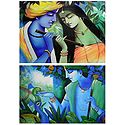
Kalighat paintings
As colonial British rule in India disintegrated the rural fabric of the early 19th century Bengal, people from the villages started migrating to the then political capital of the British, Calcutta (now rechristened, Kolkata). Simultaneously, traditional schools of art and painting like the Mughal school and various traditional Hindu schools of painting were beginning to lose patronage, partly because of the perceived lack of political strength of the local ruling class in India. It was then that this local form of paintings took shape, trying to tap the vaccum in the world of art in Bengal.
The rural populace who had migrated to Calcutta settled around a place called Kalighat, which was named so because of the famous and highly revered Kali temple that stood there. They had brought with them the rustic styles of folk art and their paintings quickly caught the imagination of the people of those times. This form of paintings came to be known as Kalighat paintings. They were made with bold sweeping brushstrokes with shading.
Initially Kalighat paintings were limited to using Hindu religious subjects for themes. Hindu Gods and Goddesses dominated the majority of these paintings. However with time, contemporary social and political topics found their way into Kalighat paintings through the use of satire in these paintings. The medium used for these paintings also changed with time as paper replaced cloth as the primary medium for Kalighat paintings.
The fortunes of Kalighat school of paintings (as well as the Kalighat painters) rose and fell with time. The initial popularity of this form of art during the colonial rule in India, ascribed to the ethnicity associated with them which so blatantly countered western forms of art, gave way to neglect by scholars of art since they had no linkages to the sacred texts of Hinduism and thus had no "sanctity". Kalighat paintings, and many other such folk-based forms of art were neglected. However, later, in the beginning of the 20th century, did the importance of folk art in the identity of a nation's culture and art sink in, since when Kalighat paintings have been given the importance they deserve and their revival has been looked into with seriousness.



Kalighat paintings
As colonial British rule in India disintegrated the rural fabric of the early 19th century Bengal, people from the villages started migrating to the then political capital of the British, Calcutta (now rechristened, Kolkata). Simultaneously, traditional schools of art and painting like the Mughal school and various traditional Hindu schools of painting were beginning to lose patronage, partly because of the perceived lack of political strength of the local ruling class in India. It was then that this local form of paintings took shape, trying to tap the vaccum in the world of art in Bengal.
The rural populace who had migrated to Calcutta settled around a place called Kalighat, which was named so because of the famous and highly revered Kali temple that stood there. They had brought with them the rustic styles of folk art and their paintings quickly caught the imagination of the people of those times. This form of paintings came to be known as Kalighat paintings. They were made with bold sweeping brushstrokes with shading.
Initially Kalighat paintings were limited to using Hindu religious subjects for themes. Hindu Gods and Goddesses dominated the majority of these paintings. However with time, contemporary social and political topics found their way into Kalighat paintings through the use of satire in these paintings. The medium used for these paintings also changed with time as paper replaced cloth as the primary medium for Kalighat paintings.
The fortunes of Kalighat school of paintings (as well as the Kalighat painters) rose and fell with time. The initial popularity of this form of art during the colonial rule in India, ascribed to the ethnicity associated with them which so blatantly countered western forms of art, gave way to neglect by scholars of art since they had no linkages to the sacred texts of Hinduism and thus had no 'sanctity'. Kalighat paintings, and many other such folk-based forms of art were neglected. However, later, in the beginning of the 20th century, did the importance of folk art in the identity of a nation's culture and art sink in, since when Kalighat paintings have been given the importance they deserve and their revival has been looked into with seriousness.)