Please wait...

We wear the mask that grins
and lies,
It hides our cheeks and shades our eyes,
This debt we pay to human guile;
With torn and bleeding hearts we smile,
And mouth with myriad subtleties.
--Dunbar
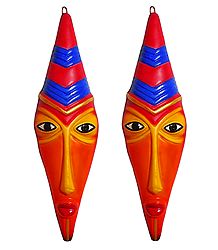
When not trapped in the stereotypes of being "hypocritical guises" or "camouflaged farces", masks reflect the innocence of the primitive people of the world who were the real creators of these aesthetically sublime and culturally functional symbols. The mask is a heritage of this planet and works beyond all stipulated geo-political boundaries of the world.
Masks portray the various moods that get embossed on our faces as reflections of the various emotions and states of mind that an individual goes through. Experiences of emotions - love, anger, hate, fury, joy, fear, disgust, sorrow - transcend castes, creed and nationality and the universal body language depicting these emotions has been sought by man to be given form through masks.
Masks can be thought of as having been created by our ancestors to form a bridge between the outer phenomenal world and the inner person. Though the modern world belittles masks as being tools for cosmetic disguise and are often attached with a negative connotation, the ancient world treated masks as instruments of revelations - a pathway to the world of gods and other invisible powers - by giving form to the formless. This endeavor of our ancestors to know the unknown is given shape by the mask - be it of deities or cult icons or even exorcism and ritual healing. Masks thus became an object of reverence in all ancient cultures and are considered so, even now by aboriginal people around the world.
The ancient Latin word for mask is "persona" which literally indicates "false face", an aspect of the personality shown to or perceived by others. Every person is said to have at least two selves - one without any guise and the other, an 'alternate self' - one which may or may not be a pretension. While it is the field of behavioral psychology that delves into the nuances of multiple selves of a person, for the common man, the search for the 'self' as well as its reflective imaginations has led to the discovery of the Mask - something that could give form to various guises which were far from the conscious self but close to the mind.
While the primitive man, out of fear of the natural power around them, copied the world of animals and birds through symbols, paintings and sketches around him, the fear of the dynamism of nature within and outside, propelled him to create masks as a linkage between his world and the one unknown to him. Rituals built around these masks combined with costumes and music of the people of those times depict the psyche of man during those times, reflecting the natural world through actual imitation or through other representational forms. It was believed that masks linked to natural powers served the community by striking a harmonious balance with the forces of nature and the spirit world.
Masks cannot be thought of as works of art alone - they serve multiple functions, all of which contribute in expressing the human elements and messages, which they personify. These functions, briefly can be indicated as:
As a tool in both popular and sophisticated theatrical forms, the mask helps in portraying various socio-cultural themes through direct or indirect or even satiric depiction of people or various social concepts. Religious rituals of various forms in various cultures also have wide use of masks in initiation rites, life-cycle ceremonies, rites of exorcism and ritual healing, and also in celebration ceremonies like those after crop harvests. All three possible types of masks - ritual masks, war and monstrous masks, and masks for tribal and folk performances at the time of festivals - are ritual in origin.
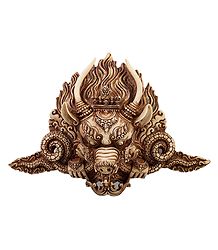
The origin of the mask has been traced to pre-historic man. Depictions of masks have been found in various rock paintings and cave paintings. Masks were probably used for hunting and taming animals and for their primeval dances. The Mohenjodaro excavations, which brought to light the ancient Indus valley civilization (2500 B.C.), have revealed a Terracotta mask, which is called the Pashupati mask. Interestingly, a similar looking mask, which is said to depict the God Cernunnos, has been found in European excavations of Celtic age artifacts.
The traditions of Indian dance and dance dramas are among the most perplexingly complex and varied theatrical cultures of the world. The geographical vastness, different ecological conditions, multiplicity of races and their languages, the complex religious beliefs and ritual practices and equally intricate social structure have all contributed in creating the most colorful panorama of dance and dance drama traditions. India has a huge range of decorative, festive and ceremonial masks related to the vast repertoire of myths, legends and folkore, which revolve around idolized deities, valiant heroes, and fierce demons.

In olden days, masks of Siva and and Shakti were considered extremely powerful iconic masks in India. The three-eyed 'shakti', in the form of Durga and Kali, are very common in the eastern belt of India. A very common use of these masks is found in the mask dances in which narrative plays are staged in which Goddess Durga (or any of her forms of Shakti) kills the evil demon. Along with the power of the deity, masks also depict the pet or "vahana" (vehicle) of the deity. For example, the lion (Goddess Durga's vahana) is shown along with her while the goddess kills the asura (demon). This implies the linkage sought between natural power and ritualistic connotations.
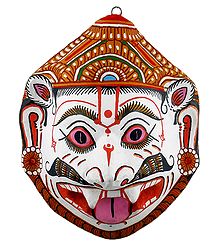
Another extremely popular theme in India is the Hindu epic, Ramayana. Staging of this epic as Ramlila always captures the psyche of people through masked depictions of its characters. Even though now it is non-ritualistic in nature, the enactment of this epic through the Ramlila processions (procession which eulogizes the tale of Lord Rama) or through various theatrical forms. Ramlila masks often see the use of zari (golden glittery thread) and brass. Another very popular figure is that of the Narasimha (one of the incarnations of Lord Vishnu) icon from the Bhagavata-mala, in Andhra Pradesh in south India. The Bhagavat Mela Natakam of Tamil Nadu and Andhra Pradesh, Prahlada Natakam of Orissa and Bayalatta theatre of Karnataka also use Narasimha masks.
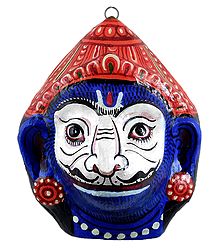
Depiction of animals through masks has been a practice that has survived from prehistoric times. The power and fury of the faces of animals have always enchanted man. Mythological and real animals remain a powerful component of folk-religion and occupy a sacred space in the minds of the natives of any nation. The lion mask of Purulia and the Jackal mask from Gambhira (both in West Bengal in eastern India) with their dull color temperatures, the animal masks of northeastern India and those of Madhya Pradesh in central India are prominent examples of mask depictions of animals. The wooden masks from tribal Madhya Pradesh have carvings of images from the animal world, of snakes, insects and even the cosmos.
The tribal people of Madhya Pradesh wear masks, which they call Mukhada, during festivals and ritual dances. Mukhadas are made using the most inexpensive and readily available material. Pumpkin hollows, waste paper, cardboard and wood is used for these masks. Sometimes, a gourd hollow is also used for masks - in such a case, the mask is elongated in shape as compared to the round shape possible from a pumpkin hollow. A pair of holes is provided in the masks to peep through. However, similar holes are not provided for the nose, mouth and ears. Instead, honey-bee wax is used for the nose, pumpkin seeds or rice seeds are used to depict the teeth, and bangles form the eyes. Hair from goats or bears is used to depict beards, moustaches and hair. Though generally no coloring is externally applied to these masks, some of them do bear a blood-red color. Some tribes decorate their masks with colorful designs and add peacock plumes for added beauty. These people use gloss paper or aluminum foil to add glitter to their masks. However, masks made with perishable items are not long lasting and get destroyed by pests and moisture within a year or two. Since masks are made from readily available material and are unrefined in form, two masks can never be replicas.
The tribal communities of Gonda and Raj-gonds follow several Hindu customs and are great admirers of Lord Krishna. Therefore, their boys and girls wear masks of the Lord and Gopis (Lord Krishna's female companions) while performing group dances. They have the greatest variety of masks amongst the tribal people of Madhya Pradesh.
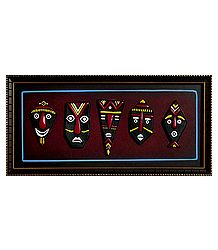
The Baiga tribe uses wood for their masks and hence they are very heavy. Their youngsters celebrate the "Charata" festival in a big way. Quite ahead of the festival day they commence making their facial masks. On the day of the festival, they dance in groups wearing these masks. The villagers honor them with food and wine. They move from village to village and repeat their performances. The tribals of Bastar District also perform this festival with all pomp and show. Maria tribal youths also wear similar masks while dancing. Their masks have bison horns on them and are smeared with red dye.
On an auspicious day, the Buyya tribals invoke god "Kalyadev." Two unmarried youths sport facial masks and numerous ornaments in order to commence their ritual dance. The audience makes queries about rain fall, prospects of a good harvest, probable date for the commencement of hunting expeditions and who should be its leader. The dancers sway and reach a state of frenzy. The "possessed" persons then suggest remedies to the problems and questions posed by the people. The villagers consider that these are the dictates of their deity and act accordingly.
Animal Mask Dances are prevalent in villages of south Orissa, especially in the district of Ganjam. During the Thankurani Yatra (a religious festival marked by a huge procession), when the idols are taken out on the streets, the animal mask dancers dance in front of the procession. During wedding ceremonies too, they lead the bridegroom's procession all the way to the bride's house. The three animal mask dances typical of the area are the tiger, bull and horse dances. Two persons get into a cane frame and conceal themselves within it. Their legs become the legs of the animals they are representing.
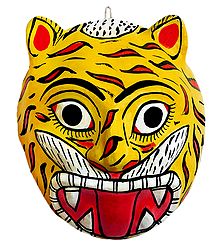
Another such animal dance is the Chaiti Ghoda Dance, which is performed by the people of the Kaibarta caste of Orissa during the month of Chaitra (springtime in India), to honor their deity, Vasuli Devi. A man, riding on a bamboo-horse, dances with a couple (Rauta and Rautani) and is accompanied by a drummer and a piper. The tiger dance called the Bagh Nritya is also popular in Orissa.
Kucchhi Ghodi is a mask dance performed during Holi - the festival of colors - in Braj, Uttar Pradesh and Rajasthan. Men in elaborate costumes ride well-decorated dummy horses, holding naked swords and dance to the rhythm of drumbeats.
The Bhand Pather form of theatre in Shikargah, Kashmir, uses masks for deer, gods and tigers, with a costume incorporating the mask. These deer masks have movable jaws. The Chittoor, Nellore, Prakasam and Guntur districts of Andhra Pradesh boast of the Keelugurram, which is the imitation of the dance movements of a horse by men and women. This entertaining horse is made of thin bamboo-pieces and is covered with paper-paste. Dancers hold the horse with attached sticks and perform to the tunes of musical instruments. The horsemen wear wooden legs and ankle-bells. The horse is also decorated with bells around its neck. Puravai Attam, also known as Poikkal Kuthirai, is a dummy horse show in Tamil Nadu. The horse is made of jute, cardboard, paper and glass. Men as well as women perform the show. Wooden stilts are tied to the dancers' feet. A pair of dancers, impersonating as king and queen, performs this dance. Puli Vesham, or tiger play, is a popular dance form all over Andhra Pradesh and is practised by both Hindus and Muslims. It is performed in open air during the festivals of Dushehra and Muharram. Experts perform the tiger-play with musical instruments, while smearing their whole body with yellow varnish, black spots and stripes, with a snake painted on the stomach. The costume contains a tiger's mask and a tail made of cloth. The performer wears bells on one ankle.
Eastern India boasts of the famous Chhau mask dances. The tribal belt where the tribals and other common people perform Chhau dances is distributed into three adjoining states, West Bengal, Bihar and Orissa. Etymologically, Chhau is derived from the Sanskrit word 'chhaya', which connotes a mask but some scholars are of opinion that Chhau is an independent colloquial Odissi word, meaning, to attack or hunt stealthily. Chhau is evidently a war dance and has three schools as such, coming from Seraikella in Bihar, Purulia in West Bengal and Mayurbhanj in Orissa. The Mayurbhanj form of Chhau uses no masks while the others do. All the three Chhau dance forms are practised by males.
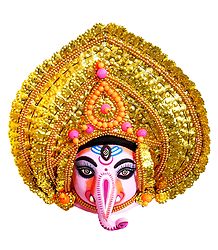
Purulia Chhau of West Bengal involves the propitiation of the Sun God through masks. It is a vibrant, powerful and ritualistic folk dance form with an inclination towards theatre and is performed during the Chaitra Parva festival or the Gajan festival in mid-April. The themes of this dance are always meant to depict how evil is punished based on mythological stories. Themes from the Ramayana, Mahabharata and Puranas are performed through this dance.
The distinguishing feature of this dance drama is the skillful use of masks and costumes, supplemented by the right tempo of music. The actors are poor and illiterate peasants. The performances are held annually at a festival of the Sun God. It is a heroic dance performance of the males, the females having an insignificant role in it. Moreover, women's roles in the drama are always played by men wearing women's masks.
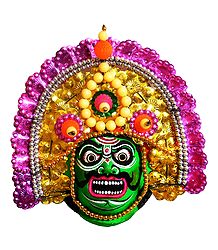
In the past, the devotees painted their face and body with colors. However, during the Vaishanava period (a period in Indian religious history during the 15th to 17th century A.D., marked by a resurgence of believers in Krishna and Vishnu) , the dance soon evolved to use wooden masks, which are considered sacred in ritualistic performances. Later on, the masks began to be prepared with a mixture of paper, pulp, mud and cloth, which made them lighter than the wooden versions. Nowadays, these facial masks are manufactured mostly in the Purulia district of West Bengal. The making of these masks is an independent art altogether. It needs a gifted artist to visualize the mask and then give shape to it. They are manufactured by artisans, well-versed in Puranas, using simple tools and inexpensive ingredients. A clay model is designed on which paper pieces are pasted and on this layer rag is attached with riverbed clay. Then it is polished with a delicate wooden chisel, followed by removing from the mould and drying in the sun. The actors depicting gods and goddesses wear star-spangled facial masks seated with feathers and jewels while those depicting the demon-king Ravana, Mahishasura (the buffalo headed demon) and other demons and evil spirits wear grotesque masks. The use of masks in Purulia Chhau not only determined the line of its growth, but also remained its focal point even after the form fully crystallized.
The costumes used are made out of locally available inexpensive materials. The actors representing gods wear light colored trousers, whereas deep colored and striped ones are reserved for the demons. The actors who depict Lord Shiva put on a loincloth of a tiger's skin while those depicting his son Ganesh wear a dhoti. Those depicting Goddess Kali have to wear a tight pair of trousers of black cloth. Saffron colored dhotis are meant for those depicting ascetics, sages and brahmins. The main characters wear embroidered jackets manufactured by the local women. They are beautifully designed by using silk thread, tinsels and artificial pearls.
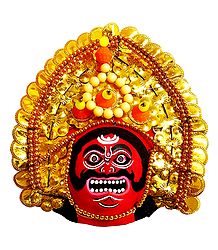
The principle occasion for the performance of Chhau in Seraikella is the Chaitra Parva, which comes about the middle of April every year. The Sareikela style of Chhau was helped in its development by royal patronage in the erstwhile princely states comprising the state of Bihar. The kings of these states with artistic leanings actively participated in dance performances of Chhau. This mask dance form originated in medieval India in Saraikela in southern Bihar. Masks are an essential part of a Chhau performance and mask making has been a hereditary trade. Over the generations the masks have become more stylized. Originally made of wood, then bamboo and pumpkin-shells, at present they are made of papier mache. Sophisticated masks, made of paper-mache with awe-inspiring headgear, add to the folk tune and steps of the dancers. The dance motifs and themes are interrelated with myths and history covering animates and inanimates as well as sentiments. The Seraikella Chau has extended its thematic content by introducing very suggestive and poetic subjects into its repertoire.
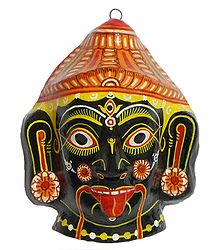
The Seraikella Chau is one of the three rare mask traditions, which received royal patronage and active participation by the learned members of the royal family. This has nearly transformed or metamorphosed the form of this dance from the tribal to almost a highly refined 'classical' dance form. One of the royal members with his choreographic genius introduced highly suggestive themes and stylized body language that matched the poet's imagination. Today the repertoire can boast one of the widest range of subjects that may draw inspiration from birds, animals, divine beings or even common people from our daily life like a fisherman or a hunter or a boatman. Remarkably enough it can also depict phenomenon like the night in a most poetic manner. The suggestive narratives with the unique body kinetics convey the deeper allegorical meanings that echo a higher philosophy of life.
Kali Nach is performed in West Bengal, in honor of Goddess Kali. The performer wears a mask, purified by mantras; dances with a sword, and makes prophetic proclamations. Gambhira is a solo mask dance, confined to the district Maldah, West Bengal. The mask, made of a special sacred wood, requires great physical efforts to carry on the face. The characters represent Puranic (from the Puranas - ancient Hindu religious text) deities like lord Shiva, Goddess Parvati and Goddess Kali, with loud beats of drums during the Gajan festival.
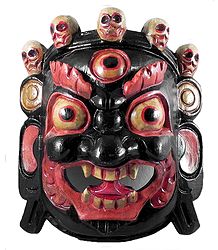
Mukha Kheil (mask play) is prevalent in the Jalpaiguri district of West Bengal among local Rajvamshis (royals). The dance is thematic and is based on the Hindu epic, Ramayana. The masks are made of wood in Tibetan style. Some of the best examples of masks from Bengal come from the jungle Rabhas in Jalpaiguri district. There are three types of masks - each has a distinct name, is made of a different material, and represents a particular character: Char-gog, the mask of the goddess Chandi, is made of bamboo strips. The mask is used in the religious dance performed following Kali Puja. After the performance, the mask is cut into pieces and thrown in the river for fear of incurring the displeasure of the goddess. Char-pagal is made of wood in the form of a human face and is also used during Kali Puja. Maper-char is made of gourd shell, with the face of a bear painted on the upper surface.
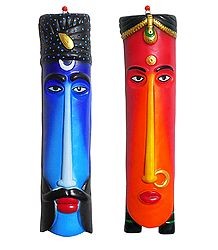
The Satriya dance, ascribed to the Vaishnava movement in Assam during 15th to 17th century A.D., is one of the most interesting dance forms of India. The Satriya dance is an enduring tradition pursued and preserved in the Satra institutions, another hallmark of the Vaishnava movement. This mask dance drama is mostly based on religious stories related to the life of lord Krishna. Some of the life size Satriya masks measure about ten feet in height. Others represent both head and face masks. The masks have the inner core in bamboo strips covered by threads of cane with the coating of cow dung, clay, cloth and paper. The images are then painted with vegetable pigments.
Ankia Nat is a type of one act folk play of Assam, using big masks of demons, animals, gods and goddesses made of bamboo. Heights of these masks reach up to the waist and can be as tall as 15 feet, and need several actors to manipulate them. Actors enter into the masks and rest the masks on their shoulder. Since the masks are very heavy and not very mobile in nature, the characters that these masks depict are generally demons or snakes, which have very limited movements.
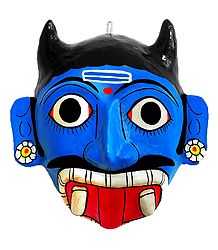
The Shahi Jatra (royal procession) of Orissa presents different episodes from the Ramayana during the spring season, for a week. Actors, wearing huge wooden masks and gorgeous costumes, walk on the streets with stylized gait and mime with accompaniment of loud drumming. Desianata of Koraput, Orissa, also uses masks for representing gods, goddesses, animals, birds and demons. Themes, again, are taken from Ramayana.
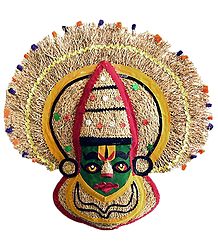
Padayani or Padeni, is one of the most colorful and spectacular folk arts associated with the festivals of certain temples in southern Kerala (Aleppy, Quilon, Pathanamthitta, and Kottayam districts). The word Padayani literally means military formations or rows of army, but this folk art mainly involves a series of divine and semi-divine impersonations wearing huge masks or kolams of different shapes, colors and designs, painted on the stalks of areca nut fronds. The most important of the kolams usually presented in a Padayani performance are Bhairavi (Kali), Kalan (god of death), Yakshi (fairy) and Pakshi (bird), among others. The Kolam (mask) consists primarily of a huge headgear with many projections and devices with a mask for the face or a chest piece to cover the breast and abdomen of the performer.
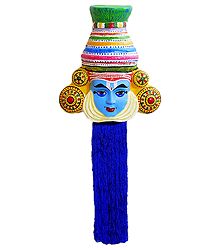
Krishnattam, the ritualistic dance-drama of Kerala, is a cycle of eight plays, depicting the tales of Krishna from his birth to his death. It is performed in the Koothambalam (dance stage of the temple) of the Krishna temple in Guruvayoor, Kerala and involves the use of varied and colorful facial make-up and larger-than-life masks, made of lightwood and cloth padding. This dance form is based on the 17th century Krishnageethi, and is staged for eight nights till dawn.
Kummattikkali is a popular dance form in the northern districts of Kerala. The dancers move from house to house in painted wooden masks and sport springs of leaves and grass. This form has a popular masked character Thulla (witch), besides various Hindu gods and goddesses. The Mannan community of South Malabar, Kerala, propitiates the goddess Kali and performs Poothanam Thirayam. A troupe of dancers dresses up as Kali and the accompanying Poothanams (spirits) for the destruction of the evil Darikan. The dance is staged in front of houses and village shrines, between November and May. The Tirayattam and Bhoota dance forms of Kerala use beautiful wooden masks for deity-characters.
Among the older mask traditions of south India those of the Bhuta tribe of Karnataka are notable. So also is the Kathakali, from Kerala, which, though is not a mask dance, does involve distinctive dramatic facial coloring meant for the transformation of human dancer-actors into suras (gods) and asuras (demons) and other mythological characters. The heavy facial coloring almost makes the performers look as if they are wearing masks.
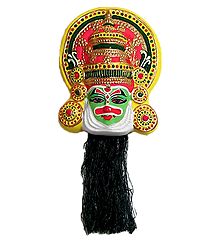
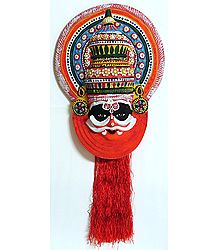
In Gujarat and Maharashtra, masks are very popular among the Kukana and Warli tribes. They usually portray animals, birds, gods and goddesses, as well as demons and ghosts, and are generally employed in dances and dramas on religious or mythological themes. During the festivals of Holi and Diwali, tribal artists organize mask-shows. The popular mask of Ravana, the demon king and villain in the Ramayana, has an arch-shaped framework of bamboo strips decorated with multicolored paper, with the ten colorful clay or papier mache heads affixed across the bottom of the arch. Painting of the masks is not merely to enrich their appearance but is a means by which the spirit of that character is infused into the mask, bringing it to life.
Masks are studded in the life and rituals of all monasteries in the Himalayan range encompassing Tibet, Ladakh, Bhutan and Sikkim. Mask dances are the part of religious and cultural traditions and the holy scripts, which date back to the 8th century A.D. India's close neighbor, Bhutan, has fearful masks of animal spirits, which are codified, with very high aesthetic connotations of color and shape. The Mahayana tradition of Buddhism survives only in this country.
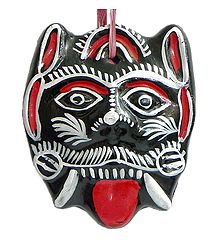
The Tibetan monks practice the religious Chham dance with great fervor. The Chham dance can take many forms but one of its most popular themes is commemoration of Padmasambhava. The mask dance usually consists of two parts: the first honors and pays homage to the eight aspects of Padmasambhava. The second part of the performance shows Maha Dongcren, a horned masked figure, slaying the demonic force. The Chham Dance is performed in the courtyard of monasteries by the Buddhist Lamas residing in the monasteries of Lahaul and Spiti, Ladakh, and Kinnaur. The main theme of this dance deals with propitiating the deity, killing the evil king and protecting the people from the wrath of natural calamities, diseases and epidemics and ensuring health, happiness and prosperity for the people of the area. The Lamas, dance in slow, circular movements with big, colorful masks and grotesque expressions, in accompaniment with the beats of drums, cymbals and long pipes. The Lamas prepare the masks, made of wood and papier-mâché with a thin coat of plaster. The figures usually portrayed are of Yama (the Lord of death) and his demons, Padmasambhava (the second Buddha), the god of wealth, and the protector of horses and other animals.
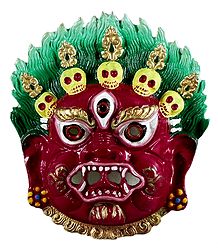
The Hemis monastery of Ladakh is home to a number of colorful and beautiful mask dances from the Buddhist culture. Hemis is one of the largest and richest monasteries of Ladakh and is a leading center of Drugpa Buddhism. On the tenth day of the sixth month of the Ladakhi calendar, the monastery turns into a very large stage where monks, tourists and people from all over the world congregate for the famous masked dances. The performers wear elaborate and bizarre costumes and masks and through typically slow dance movements, unfurl a story of the age-old fight between good and evil, ending with the eventual victory of the former. Typical costumes include Gonchas of velvet, elaborately embroidered waistcoats and boots, and gonads or hats.
The various dances performed here have a separate set of colorful masks to depict different figures. The Padmasambhava dance, which shows the conquest of the ruta demons, has among other figures represented in the dance, Yama - the God of death, and the black-hatted sorcerer, Guru Trakpo - the vanquisher of all demons. The brightly colored and beautifully costumed performers dance and leap in a dramatic depiction of the conflict between the evil spirit and the good, religious one. The good spirits bear triangular flags and have bells on their feet. In the course of the long performance, the latter slowly vanquishes the non-believer, converting him to the Tibetan form of Buddhism, thus representing victory. One of the dancers carries a pair of mummified hands, which are supposed to have belonged to a painter who painted the giant Thangka (Tibetan painting), which is displayed once every 12 years, in the Hemis festival.
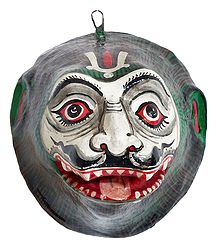
The Yak Dance portrays the unusual experience of a man driven out of his home by his father, who comes across a yak. Two men holding a yak head with elaborate costumes, act as a yak, while others perform with mask. The dances revolve around other animals, such as deer, lion, peacock and the mock cockfight. The Lion and peacock dances are performed by Monpas, and all the animal dances, depicting a story, capture gait and movements of animals. Two groups perform the cockfight dance with each group having two drummers. They wear masks resembling cock heads.
Among the other dances, which are performed in the Hemis monastery, is the Tse-Chu Dance, to celebrate the birthday of Guru Rimpoche, the founder of Tibetan Buddhism. The Lamas perform sacred masked dances leading to the destruction of the sacrificial offerings. Another festival that is celebrated every year in February with great pomp and fervor is the Dosmoche festival. Masked Lamas from different monasteries perform the sacred dance-drama. Dosmoche celebrations are also held in the Likir (Indus Valley) and Deksit (Nubra valley) monasteries. The Yuru Kabgyat festival is celebrated during July, in the monastery of Lamayuru of Leh. The masks worn by the lamas represent guardian divinities from the Dringungpa pantheon.
Away from Ladakh, the famous mask dances from Sikkim also provide a marvelous spectacle. Performed by lamas in the monastery courtyard to celebrate religious festivals, these dances demonstrate perfect footwork and grace. Costumed lamas with gaily-painted masks, ceremonial swords and sparkling jewels, leap and swing to the rhythm of resounding drums, trumpeting of horns and chanting of monks.
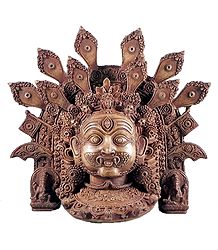
In the Kinnaur district of Himachal Pradesh in north India, the Lama Devil dance is one of the most attractive mask dances of the Kinnauri tribals. Two of the dancers are dressed as lions. The dance depicts the taming of the lion that represents evil spirits. Perhaps the earliest known masks still in use are the bronze mohras of the northern hills. In Himachal Pradesh the cult of mohras (embosses) is apparently much older than the cult of icons. The casting of these mohras with iconographic and stylistic features was established by the sixth century. Another unique group from this region are the wooden masks from the Kannaur village in Chamba.
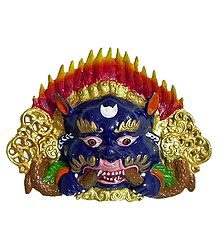
In the northeastern states of India too, Buddhist tribes use masks for dance and pantomime. This custom can be traced from about the sixteenth century when monks from the Tawang monastery in present-day Arunachal Pradesh propagated Buddhist philosophy in that region. A number of mask dances in the trans-Himalayan style are regularly performed during Buddhist festivals and ceremonies, as well as for recreation and amusement. Masks are also integral to the magico-religious practices prevalent among the different tribes in this region.
Thutotdam is the dance of the Sherdukpens and the Monpas of Arunachal Pradesh, representing skulls and costumes designed as skeletons. It depicts how the souls after death are received in the other world. Nongkrem Dance is the most important mask dance of the Khasis in Meghalaya and is celebrated during autumn, essentially as a thanks-giving ceremony to God for the harvest and to pray for peace and prosperity.
Most nations all over the world have a cultural past, which is inseparably linked to masks making them a universal phenomenon. A notable exception is the Arabic world with its Islamic background, which stays away from deification and iconization of characters. Masks from all over the world converge on the universality of the human mind and the power of the human imagination. The Mask forms a silent language which is universally understood and which defines the essence of human expressions and emotions at various levels - spiritual, religious and material.
The flavor of masks still remains as fresh as ever even though today, the focus of the use of masks has shifted from the performing arts and religious ceremonies, to the handicrafts market. However, whether it is made of wood or metal or fabric - the Mask continues to be a source of mystery and fascination - a mode of escape from the drudgery of everyday life seeped in technology and automation.
This article was written by:
Madhuri Guin