Please wait...

Dance, music and theatre are an enduring part of the Indian cultural milieu. Dance is the primeval expression of joy and wonder in any part of the world. In India all forms of art have a sacred origin and the inner experience of the soul finds its highest expression in music and dance. The Hindu attitude towards art as an expression of the Inner beauty or Divine in man brought it into close connection with religion. Using the body as a medium of communication, the expression of dance is perhaps the most intricate and developed, yet easily understood art form.
The invasion of India by Aryans about 4000 years ago is considered to be a turning point in the history of the country. The Aryans settled down and mixed with the local people, thus sowing the seeds of a new civilisation. This civilisation prospered on all fronts, leading to the compilation of epics like the four Vedas, Upanishads, Ramayana, Mahabharata, Puranas etc., which serve as the basis for all streams of learning. The sacred scriptures of the four Vedas (Sama, Yajur, Rig and Atharv), were said to be divine spiritual knowledge derived from the supreme, self existing God. Elaborate and eloquent references to the art of dancing also abound in the Rig Veda, which was compiled around 1500 B.C, thus substantiating that dance was one of the oldest forms of art in India. The passage of time resulted in emergence of many classical dance forms including Bharatnatyam, Kuchipudi, Kathakali, Mohini Attam, Kathak, Odissi and Manipuri, and various other folk dances in India.
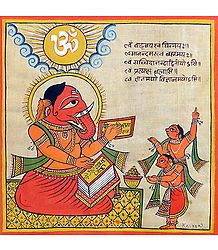
The art of dance was created by Lord Brahma (the Creator), according to the Natya Shastra and Abhinaya Darpana, the treatises on dance. The Natya Shastra is the earliest Indian text in the history of performing arts. It was created by Lord Brahma on the request of Lord Indra and other gods as a form of entertainment. As the lower castes were not entitled to listen to the four Vedas, Lord Brahma created the Natya Shastra as the fifth Veda, which was open to all, irrespective of caste and creed.
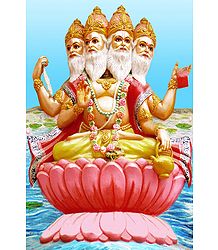
Prior to the creation of the Natya Veda, Brahma entered a yogic trance in which he recalled the four Vedas. He drew literature from the Rig Veda, song from the Sama Veda, abhinaya or expression from the Yajur Veda and rasa or aesthetic experience from the Atharva Veda. These aspects are the four main constituents of the Natya Veda. It was suggested to Lord Indra that the Natya Veda be used for the entertainment and enlightenment of the Gods, but the Gods expressed their inability to practice it. Lord Brahma passed on the Natya Veda to his son, sage Bharata, who passed it on to his 100 sons. Thus this divine art descended from the heavens to Earth. Lord Shiva learnt the Tandava (masculine form of dance), whereas Goddess Parvati, his consort, learnt the Lasya (feminine form).
Bharata staged his first play with his hundred sons and Apsaras (celestial dancers created by Amrita Manthana, the churning of the divine ocean). The play was staged in the ampitheatre of the Himalayas. Lord Shiva, the destroyer and the ultimate dancer, was so enchanted that he sent his disciple Tandu to Bharata, to teach him the true elements of dance. These are depicted in the Natya Shastra, in its chapters collectively named the Tandava Lakshana.
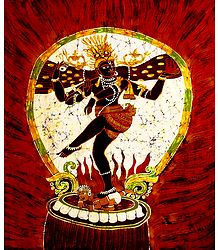
Tandava, the classical dance, takes its name from Tandu, the celestial attendant of Lord Shiva who instructed the sage Bharata in the use of the Angaharas and Karanas, the plastic modes of Tandava at Lord Shiva's behest. A Karana is a unit of dance in which gesture, step and attitude are coordinated in a harmonious rhythmic movement. A sequence of six or more Karanas is called an Angahara. Anga refers to the body and Hara is a name of Lord Shiva, creator of the Tandava, comprising 32 Angaharas composed of 108 Karanas.
The Shiva temple of Chidambaram is sculpted with these 108 Karanas on the inner walls of the 4 gateways leading to the temple. These lovely sculptures vividly depict the Tandava dance form.
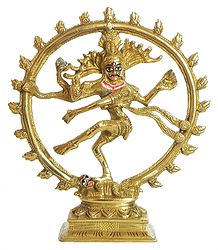
Shiva Nataraja is considered to be the god of dance in Hindu mythology. His dancing image, in the Tandava form, is the starting point of all creation. To the dancer the four arms of the Nataraja are a depiction of dance movement in an immovable and static medium. The mystique of the arms and legs of the figure has a cosmological significance as the dance is taken as merely a human representation of a cosmic fact. In the Nataraja image the frontal palm of the right hand which is lifted and slightly bent represents security (abhaya) to devotees. The left hand which is thrown across the body with the fingers pointing downwards indicates the feet of the Lord as the refuge of devotees. The upraised left foot represents the blessing bestowed by the Lord. In the right upper hand Shiva carries a small drum representing the creative sound which began the universe, and in the other hand he has a fire which is symbolic of light and therefore destruction of ignorance. Under the right foot is a dwarf, which signifies triumph over evil. Encapsulated in this figure of the Dancing Lord is the entire function of Shiva as the creator, preserver and destroyer. This dance is a metaphor for the belief that life is essentially a dynamic balancing of good and bad, where opposites are interdependent. The dance of Shiva is the dance of life.
Indian dance is a blend of nritta (the rhythmic elements), nritya (the combination of rhythm with expression) and natya (the dramatic element). Nritta is the rhythmic movement of the body in dance. It does not express any emotion. Nritya is usually expressed through the eyes, hands and facial movements. Nritya combined with nritta makes up the usual dance programs. Nritya comprises abhinaya, depicting rasa (sentimental) and Bhava (mood). To appreciate natya or dance drama, one has to understand and appreciate Indian legends. Most Indian dances take their themes from India's rich mythology and folk legends. Hindu gods and goddesses like Vishnu and Lakshmi, Rama and Sita, Krishna and Radha are all depicted in classical Indian dances.
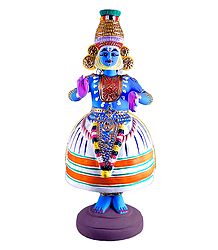
Classical dance is a combination of bhava, raga and tala (mood, melody and rhythm). The Gati or gait, is stylized for each classical dance form. The Gati is also called Chaal in Kathak, Chali in Odissi and Nadai in Bharatnatyam.
Abhinaya is the rhythmic expression of moods, emotions and a narrative through the use of Mudra (hand gestures), Bhanga (postures of the body) and Rasa (facial expressions). Abhinaya has been vividly described in Abhinaya Darpana, a medieval work on histrionics by Nandikeswara. Costume, make-up and jewelry, that aid the performer in expressing mood, emotion or dramatic elements of Abhinaya, is known as Aharya Abhinaya. Gestures and stances that aid Abhinaya are called Angik Abhinaya.
The ideal postures of the body are depicted in the Shilpa Shastra and there are 4 types of Bhangas (postures), the deviations of the body from the central erect position. These four Bhangas are: Abhanga, Samabhanga, Atibhanga and Tribhanga. Abhanga signifies "off-center", an iconographic term for a slightly askew standing position. Samabhanga is the equal distribution of the body limbs on a central line, whether standing or sitting. Atibhanga is the great bend with the torso diagonally inclined and the knees bent. Tribhanga is the triple bend with one hip raised, the torso curved to the opposite side and the head tilted at an angle.
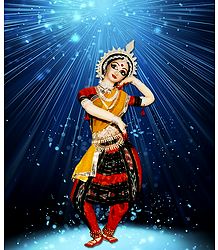
The Mudras (hand-gestures) complement Abhinaya, which is expressed through facial expression and body gestures. Abhayamudra and Abhishekamudra are the two varieties of Mudras. The former (Abhayamudra), with its palm-upraised gesture, is an expression of protection and reassurance. The latter (Abhishekamudra), with its sprinkling hand gesture is commonly seen in Buddhist images.
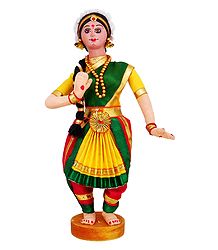
There are 9 major classical categories of emotions or Rasa, called Navarasas for Abhinaya. They are Adbhuta or wonder, Bhaya or terror, Bhibatsa or disgust, Hasya or humour, Karuna or pathos, Rudra or anger, Shringara or love, Vira or heroism and Shanta or peace. Except Kathakali, most classical dances do not explore the full ranges of rasas today, but restrict themselves to Shringara rasa and Bhaktibhava (devotion).
Each Indian classical dance form also draws inspiration from stories depicting the life, ethics and beliefs of the Indian people. The genesis of the contemporary styles of classical dances can be traced to the period between 1300-1400 A.D. India offers a number of classical dance forms, each of which can be traced to different parts of the country. Each form represents the culture and ethos of a particular region or a group of people.
Bharatnatyam flourished in areas of Tamil Nadu, Karnataka and Andhra Pradesh. Kuchipudi is another famous classical dance of South India, from Andhra Pradesh. Kathakali is a theatrical dance form of Kerala. Mohini Attam is the feminine counterpart of Kathakali. Kathak is the classical dance form of North India and has two main Gharanas or schools - the Jaipur Gharana and the Lucknow Gharana. Odissi is the classical dance of Orissa and was mainly centered around Puri and Bhubaneswar. Manipuri is the classical dance of the North-Eastern state of Manipur. Besides these, there are several semi-classical dances that contribute to the plethora of Indian dances.
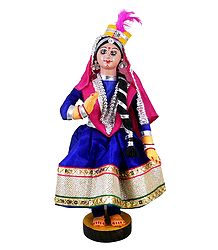
In India, dance and music pervade all aspects of life and bring color, joy and gaiety to a number of festivals and ceremonies. In fact, dance and music in India are tied inextricably to festivity of any kind.
This article was written by:
Madhuri Guin