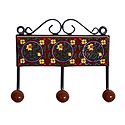
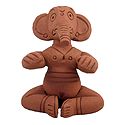
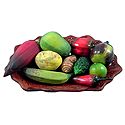
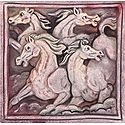
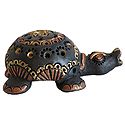
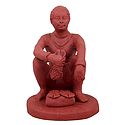
Indian potter creates magnificent shapes from clay by hand with the help of a spinning potters wheel. One of the most striking characteristics of Indian pottery is its variety. Variations of texture, color, form and style of decoration seem to be almost endless. This diversity is one of the qualities of Indian pottery that tends to appeal to collectors. The craftsman in this creative work, whether the potter with his simple articles of unpolished earthenware in natural colors of terracotta, or the more skilled artisan with his glazed ceramics with intricate motifs, has played a vital role in everyday life in India. He has been the enduring link between the individual and his household needs. The potter's jars, cooking pots, water pitchers, plates, incense burners, vases and bowls are all items of daily use.
One can see the potters at work, revolving their wheels, whizzing the clay to turn it into miraculously symmetrical shapes. The wheel is of the common kind, thick with short spokes, and turns on a pivot of hard wood or metal, provided with a large hub that acts as a revolving table. The potter throws the kneaded clay into the center of the wheel rounding it off, and then spins the wheel. As the whirling gathers momentum, he begins to shape the clay. When it is over, he severs the shaped bit from the rest.



Indian potter creates magnificent shapes from clay by hand with the help of a spinning potters wheel. One of the most striking characteristics of Indian pottery is its variety. Variations of texture, color, form and style of decoration seem to be almost endless. This diversity is one of the qualities of Indian pottery that tends to appeal to collectors. The craftsman in this creative work, whether the potter with his simple articles of unpolished earthenware in natural colors of terracotta, or the more skilled artisan with his glazed ceramics with intricate motifs, has played a vital role in everyday life in India. He has been the enduring link between the individual and his household needs. The potter's jars, cooking pots, water pitchers, plates, incense burners, vases and bowls are all items of daily use.
One can see the potters at work, revolving their wheels, whizzing the clay to turn it into miraculously symmetrical shapes. The wheel is of the common kind, thick with short spokes, and turns on a pivot of hard wood or metal, provided with a large hub that acts as a revolving table. The potter throws the kneaded clay into the center of the wheel rounding it off, and then spins the wheel. As the whirling gathers momentum, he begins to shape the clay. When it is over, he severs the shaped bit from the rest.)